Life After Bankruptcy

John P. Brooke • October 10, 2018

Posted 21 Sep, 2016

You have a fresh start, and some new challenges. Your credit rating, which probably wasn't all that great already, will be impacted by filing for bankruptcy. Filing for bankruptcy will have a short term negative impact on your credit rating, but not filing for bankruptcy may be worse. Not filing for bankruptcy and continuing to incur late fees, legal charges and judgments will continue to bring down your credit until you do something about it.

You really need to ask yourself several key questions including, 'how did I get here? What could I have done differently and what should I do differently in the future? And what have I learned from all of this? Your answers will help you create a better financial afterlife in the wake of a bankruptcy.

Many of my clients tell me that they were able to obtain a new car loan immediately after filing a chapter 7 bankruptcy, even while it is still on their credit report. FHA guidelines also allow you to get a mortgage two (2) years after filing a ch. 7 bankruptcy. You will also get solicited for new credit cards almost immediately because you can only file for a chapter 7 once every eight (8) years. The creditors know you have to pay back your debt to them so they will make credit easy to obtain, although at slightly higher interest rates. Generally, you do not want to incur more credit card debt, however you may want to get one credit card for emergencies or for contingencies such as booking plane tickets or car rentals. Remember, the whole point of filing for bankruptcy in the first place was to rid yourself of debt and get a fresh start, not to get into debt all over again.

After your bankruptcy has been discharged, you need to re-establish your good credit. You need to do so right away for a chapter 7 or after reorganization for a Chapter 13. Obviously, continuing to pay your other bills on time such as your mortgage and utilities will help to build up your credit. You may also want to get either a secured or unsecured credit card and pay it off every month. There are reputable companies available who will help you to build your credit back up. This can be explained more during your free initial consultation.

You are only able to receive a discharge in a chapter 7 bankruptcy after eight (8) years have passed since the commencement of the last case in which you received a discharge. You generally can file another chapter 13 case sooner (usually 4 years) if the need arises. Thus, you should not file a bankruptcy if you need the option of doing it again in the next few years. The case may arise if the reason you are filing bankruptcy is to discharge medical bills and you may have to incur additional medical bills in the future.


By John Brooke December 19, 2025
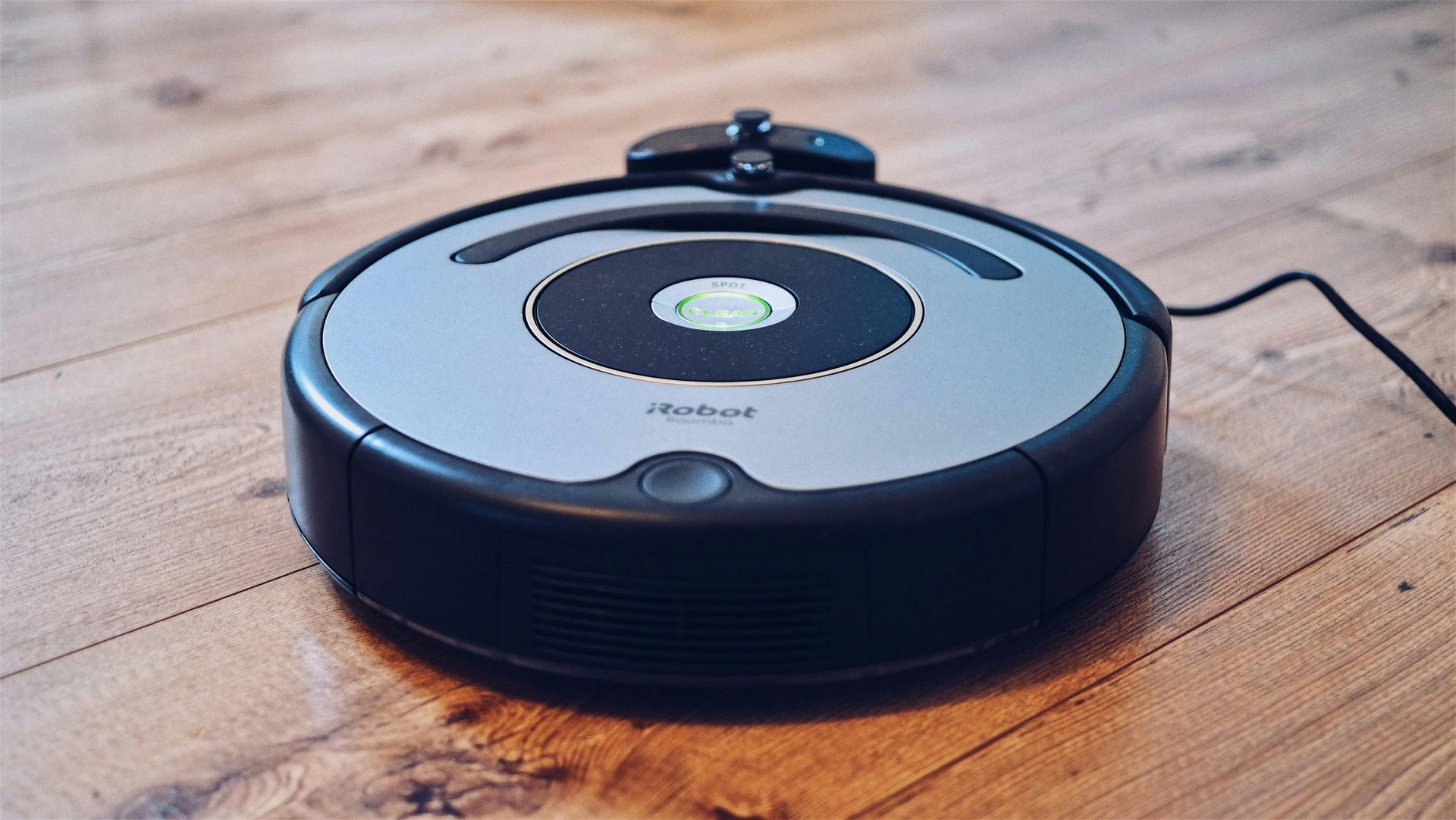
i Robot, the maker of the Roomba vacuum cleaner, filed for bankruptcy protection on Sunday, saying that it would go private after being bought by Picea Robotics, its primary manufacturer. The company, which raised concerns about staying in business in March, filed for Chapter 11 protection in Delaware bankruptcy court as it grapples with increased competition from lower-priced rivals and new U.S. tariffs. iRobot generated about $682 million in total revenue in 2024, but its profits have been eroded by competition from Chinese rivals like Ecovacs Robotics. iRobot remains dominant in key markets like the U.S. and Japan, but competition forced it to lower its prices and make substantial investments in technological upgrades, according to bankruptcy court filings. New U.S. tariffs have also harmed the company, especially a 46% levy on imports from Vietnam, where iRobot manufactures vacuum cleaners for the U.S. market. The tariffs raised the company’s costs by $23 million in 2025, while making it more difficult to plan for the future, according to iRobot’s court filings. The company, which was the target of a thwarted $1.4 billion buyout by Amazon.com, has about $190 million in debt. The debt stems from a 2023 loan that iRobot used to refinance its operations, while a European competition investigation stalled the Amazon deal. After the Amazon deal fell apart and iRobot fell behind on payments to Picea, the China-based manufacturer acquired iRobot’s debt from a group of investment funds managed by the Carlyle Group, according to court documents. Under iRobot’s bankruptcy plan, Picea will take 100% of the company’s equity and cancel the $190 million remaining on the 2023 loan, as well as an additional $74 million debt that iRobot owes to Picea under the companies’ manufacturing agreement. Other creditors and suppliers will be paid in full, according to iRobot’s bankruptcy court filings. iRobot said the bankruptcy is not expected to disrupt its app functionality, customer programs, global partners, supply chain relationships or product support. The loss-making company was valued at $3.56 billion in 2021, driven by pandemic-fueled demand, but it is now worth around $140 million, according to data compiled by LSEG. iRobot was founded in 1990 by three Massachusetts Institute of Technology roboticists. It initially focused on defense and space work before debuting the Roomba robotic vacuum in 2002. The Roomba was an immediate success and it holds about 42% of the U.S. market share and 65% of the Japanese market share for robotic vacuum cleaners, according to the company. iRobot is headquartered in Bedford, Massachusetts, and it has 274 employees, according to court documents. Article credited from CNBC.com
By John+ Brooke November 19, 2025
The share of subprime borrowers at least 60 days behind on their auto loans rose to 6.65% in October, the highest level on record, according to Fitch Ratings data going back to the early 1990s. Subprime borrowing refers to lending to consumers with lower credit scores or limited credit histories, who are considered higher risk and typically charged higher interest rates to offset the increased likelihood of default. PrimaLend, which serves the "buy-here-pay-here" auto financing market — where dealers sell and directly finance vehicles for customers with poor or limited credit — filed for bankruptcy protection last month. Tricolor, which sold cars and provided auto loans mostly to low-income Hispanic communities in the Southwestern United States, also filed for bankruptcy in September. A further deterioration in credit quality could weigh on lenders, especially at a time when investors are highly sensitive to signs of stress in loan portfolios . High borrowing costs, rising living expenses and shrinking savings are squeezing household budgets, leaving subprime borrowers increasingly vulnerable. Rising subprime auto delinquencies are emerging as a clear sign of mounting stress in the credit market , as many lower-income Americans struggle to keep up with payments. Subprime auto loan delinquencies, where borrowers have gone at least 60 days without making a payment, rose to 6.65% in October, up from 6.50% in September and 6.23% a year earlier, according to Fitch Ratings data. For prime borrowers, those with stronger credit histories, the rate held steady at 0.37%, unchanged from both the previous month and a year ago, indicating they remain largely shielded from the financial strain affecting lower-income consumers.
By John+ Brooke October 17, 2025
U.S. auto parts maker First Brands filed for bankruptcy protection on Monday after disclosing liabilities exceeding $10 billion, marking the collapse of a company whose rapidly deteriorating finances have shocked debt investors in recent weeks. First Brands is expected to soon disclose an issue with its factoring arrangements amounting to nearly $2 billion, according to people familiar with the matter. The company's board and creditors are investigating the issue, one of these people said, confirming an earlier report in the Wall Street Journal. Factoring is a financing method that is tied to the future revenue of a company. The company, whose fortunes unraveled in recent weeks as it grappled with a debt pile from a flurry of acquisitions over the past few years, has obtained $1.1 billion in debtor-in-possession financing from its first-lien lenders to support ongoing operations, it said in a statement. Financial troubles at the auto parts supplier, coupled with the recent bankruptcy of subprime auto lender Tricolor Holdings, have rattled debt investors and stoked fears of broader stress in corporate debt markets, according to bankruptcy experts . The high-profile collapse of First Brands has raised questions among investors about potential ripple effects across the automotive parts industry, although experts said automaker supply chains are not likely to be affected broadly since First Brands is primarily an aftermarket parts provider. Ohio-based First Brands, which is owned by businessman Patrick James, said that its Chapter 11 cases pertain solely to U.S. operations, and expects its global operations to continue uninterrupted. In its Chapter 11 petition, First Brands estimated liabilities in the range of $10 billion to $50 billion, while its assets were estimated at between $1 billion and $10 billion. Bankers and creditors had been racing to restructure First Brands' debt as investor confidence eroded leading up to the filing, with several of its associated companies also declaring bankruptcy. Privately held First Brands, which makes replacement components including filters, brakes and lighting systems for the automotive aftermarket, emerged as a significant player in the industry through debt-financed acquisitions of rival auto parts makers. Its well-known brands include Raybestos brake solutions, TRICO wiper blades, and FRAM filtration products. Last week, ratings agency Fitch downgraded First Brands' credit rating, saying the company's options for managing its debt were increasingly limited to off-market solutions. Asset manager Apollo Global Management and investment firm Diameter Capital Partners had amassed a short position against the company's debt earlier in September. Both firms have now closed their bets against First Brands' loans. Article credit from Reuters.com
By John Brooke July 18, 2025
Sunnova Energy said on Sunday it had filed for Chapter 11 bankruptcy protection in the United States, as the residential solar panel installer buckled under the pressure of mounting debt and weakening demand. Shares were down 36.4% at 14 cents in premarket trading. Sunnova filed for protection in the Bankruptcy Court for the Southern District of Texas after warning in March that it might not be able to continue as a going concern. The company listed its estimated assets and liabilities in the range of $10 billion to $50 billion and has a total debt of $10.67 billion as of December 31, according to a court filing. Sunnova said last week it would lay off about 55% of its workforce, or 718 employees, in a bid to cut spending. Earlier this month, its unit, Sunnova TEP Developer, had also filed for Chapter 11 bankruptcy protection. The company’s bankruptcy filing comes at a time when the U.S. residential solar energy industry is under immense pressure from higher interest rates; a reduction in incentives in the top market, California; and fears of subsidy rollbacks for clean energy. President Donald Trump’s administration, which is pushing to maximize oil and gas production, canceled a partial loan guarantee of $2.92 billion last month that was awarded to Sunnova by the Biden administration. Last year, peer SunPower, once a pioneer of the U.S. residential solar market, also collapsed following a subpoena from the U.S. Securities and Exchange Commission about its accounting practices and the departure of its CEO.  Companies that put solar panels on U.S. homes said last month a Republican budget bill that has advanced in Congress could deal a massive blow to the industry by eliminating a generous subsidy for homeowners that had buttressed the industry’s growth.
By John Brooke July 18, 2025
Del Monte Foods , the 139-year-old company best known for its canned fruits and vegetables, is filing for bankruptcy protection as U.S. consumers increasingly bypass its products for healthier or cheaper options. Del Monte has secured $912.5 million in debtor-in-possession financing that will allow it to operate normally as the sale progresses. “After a thorough evaluation of all available options, we determined a court-supervised sale process is the most effective way to accelerate our turnaround and create a stronger and enduring Del Monte Foods,” CEO Greg Longstreet said in a statement. Del Monte Foods, based in Walnut Creek, California, also owns the Contadina tomato brand, College Inn and Kitchen Basics broth brands and the Joyba bubble tea brand. The company has seen sales growth of Joyba and broth in fiscal 2024, but not enough to offset weaker sales of Del Monte’s signature canned products. “Consumer preferences have shifted away from preservative-laden canned food in favor of healthier alternatives,” said Sarah Foss, global head of legal and restructuring at Debtwire, a financial consultancy. Grocery inflation also caused consumers to seek out cheaper store brands. And President Donald Trump’s 50% tariff on imported steel, which went into effect in June, will also push up the prices Del Monte and others must pay for cans. Del Monte Foods, which is owned by Singapore’s Del Monte Pacific, was also hit with a lawsuit last year by a group of lenders that objected to the company’s debt restructuring plan. The case was settled in May with a loan that increased Del Monte’s interest expenses by $4 million annually, according to a company statement. Del Monte said late Thursday that the bankruptcy filing is part of a planned sale of company’s assets.
By John Brooke June 20, 2025
Once a formidable fast-fashion mall staple, Forever 21's parent company filed for bankruptcy protection late Sunday. It plans to "wind down" its U.S. operations unless it can find a buyer for the whole business or some of its parts. The retailer has been a shell of its former self since it first filed for bankruptcy in 2019 . It survived then as a zombie brand with fewer stores, but the chain has struggled to find life beyond the mall and to compete against fast-growing online rivals, including Shein and Temu that ship ultra-cheap goods from China. "We have been unable to find a sustainable path forward, given competition from foreign fast fashion companies ... as well as rising costs, economic challenges impacting our core customers, and evolving consumer trends," Chief Financial Officer Brad Sell said in a statement . Sell specifically called out a tax loophole used by Shein and Temu to ship clothes and accessories straight to U.S. shoppers. That enables them to avoid paying the import duties that Forever 21 and other retailers must pay when they ship goods in bulk to warehouses first. The U.S. government is now working to close the loophole . After its 2019 bankruptcy, the chain was purchased by an unusual joint venture: Big mall operators Simon Property Group and Brookfield Property Partners teamed up with a firm called Authentic Brands Group, which buys and resuscitates dying brands such as Brooks Brothers or Nine West.  Authentic Brands' CEO later described his foray into once-fast-now-ultrafast fashion with Forever 21 as his " biggest mistake ." In 2023, Forever 21's new owners tried another maneuver, signing a partnership with Shein . But losses continued, worsened by the high inflation that had shoppers tightening their clothing budgets. Court documents show Forever 21's liabilities are now ten times bigger than its assets. The company says its stores and website will keep running while executives figure out the chain's future. Stores outside the U.S. are not part of the Chapter 11 filings.
By John Brooke April 18, 2025
With genetic testing company 23andMe filing for Chapter 11 bankruptcy protection and courting bidders, the DNA data of millions of users is up for sale. A Silicon Valley stalwart since 2006, 23andMe has steadily amassed a database of people’s fundamental genetic information under the promise of helping them understand their disposition to diseases and potentially connecting with relatives. But the company’s bankruptcy filing Sunday means information is set to be sold, causing massive worry among privacy experts and advocates. “Folks have absolutely no say in where their data is going to go,” said Tazin Kahn, CEO of the nonprofit Cyber Collective, which advocates for privacy rights and cybersecurity for marginalized people. “How can we be so sure that the downstream impact of whoever purchases this data will not be catastrophic?” she said. A spokesperson for 23andMe said in an emailed statement that there will be no change to how the company stores customers’ data and that it plans to follow all relevant U.S. laws. But Andrew Crawford, an attorney at the nonprofit Center for Democracy and Technology, said genetic data lawfully acquired and held by a tech company has almost no federal regulation to begin with. Not only does the United States not have a meaningful general digital privacy law, he said, but Americans’ medical data faces less legal scrutiny if it’s held by a tech company rather than by a medical professional. The Health Insurance Portability and Accountability Act (HIPAA), which regulates some ways in which health data can be shared and stored in the United States, largely applies only “when that data is held by your doctor, your insurance company, folks kind of associated with the provision of health care,” Crawford said. “HIPAA protections don’t typically attach to entities that have IOT [internet of things] devices like fitness trackers and in many cases the genetic testing companies like 23andMe,” he said. There is precedent for 23andMe’s losing control of users’ data. In 2023, a hacker gained access to the data of what the company later admitted were around 6.9 million people, almost half of its user base at the time. Article credited from NBC News
By John Brooke April 18, 2025
Restaurant chain Hooters of America filed for bankruptcy in Texas on Monday, seeking to address its $376 million debt by selling all of its company-owned restaurants to a franchise group backed by the company’s founders. Hooters, like other casual dining restaurants, has struggled in recent years due to inflation, the high costs of labor and food, and declining spending by cash-strapped American consumers. The company currently directly owns and operates 151 locations, with another 154 restaurants operated by franchisees, primarily in the United States. The privately-owned company, which shares a private equity owner with recently-bankrupt TGI Fridays, intends to sell all corporate-owned locations to a buyer group comprised of two existing Hooters franchisees, who operate 30 high-performing Hooters locations in the U.S., mainly in Florida and Illinois. Hooters did not disclose the purchase price of the transaction, which must be approved by a U.S. bankruptcy judge before it becomes final. Founded in 1983, Hooters became famous for its chicken wings and its servers’ uniform of orange shorts and low-cut tank tops. The buyer group is backed by some of Hooters’ original founders, and it pledged to take Hooters “back to its roots.” “With over 30 years of hands-on experience across the Hooters ecosystem, we have a profound understanding of our customers and what it takes to not only meet, but consistently exceed their expectations,” said Neil Kiefer, a member of the buyer group and the current CEO of the original Hooters’ location in Clearwater, Florida. Hooters said it expects to complete the deal and emerge from bankruptcy in three to four months. The company has lined up about $35 million in financing from its existing lender group to complete the bankruptcy transaction. Casual dining restaurants have been hammered by rising costs in 2024, with well-known chains like TGI Fridays, Red Lobster, Bucca di Beppo, and Rubio’s Coastal Grill all filing for bankruptcy last year. Restaurant prices have risen about 30% in the last 5 years, outpacing consumer prices overall, according to the Federal Reserve Bank of St. Louis. Article credited from Reuters.com
By John Brooke February 14, 2025
Struggling fabric and crafts seller Joann plans to close about 500 of its stores across the U.S. — or more than half of its current nationwide footprint. The move, announced Wednesday, arrives amid a tumultuous time for Joann. Last month, the Hudson, Ohio-based retailer f iled for Chapter 11 bankruptcy protection for the second time within a year, with the company pointing to issues like sluggish consumer demand and inventory shortages. Joann previously sought Chapter 11 in March 2024 and later emerged as a private company. But after operational challenges continued to pile up, Joann filed for bankruptcy again in January. It’s now looking to sell the business — and maintained in a filing Wednesday that closing “underperforming” locations is necessary to complete that process. “This was a very difficult decision to make, given the major impact we know it will have on our Team Members, our customers and all of the communities we serve,” the company said in a statement sent to The Associated Press. “(But) right-sizing our store footprint is a critical part of our efforts to ensure the best path forward.” Joann currently operates around 800 stores across 49 states. The initial list of the roughly 500 locations it’s looking to close can be found on the company’s restructuring website — spanning states including Arizona, California, Colorado, Florida, Georgia, Illinois, Michigan, New York, Pennsylvania, Texas and more. When exactly those closures will take place and how many employees will be impacted has yet to be seen. Joann’s Wednesday motion seeks court permission to begin the process. Joann’s roots date back to 1943, with a single storefront in Cleveland, Ohio. And the retailer later grew into a national chain. Formerly known as Jo-Ann Fabric and Craft Stores, the company rebranded itself with the shortened “Joann” name for its 75th anniversary. Both of Joann’s bankruptcy filings seen over the last year arrived amid some slowdowns in discretionary spending — notably with consumers taking a step back from at-home crafts, at least relative to the early COVID-19 pandemic boom. Joann has also faced rising competition in the crafts space from rivals like Hobby Lobby, as well as from larger retailers, like Target, who now offer ample art supplies and kits. And, while Joann turned to implementing a new business plan after emerging from bankruptcy last spring, “unanticipated inventory challenges post-emergence, coupled with the prolonged impact of an excessively sluggish retail economy, put (Joann) back into an untenable debt position,” interim CEO Michael Prendergast noted in a sworn court declaration filed when Joann initiated its latest Chapter 11 proceedings on Jan. 15. Prendergast explained that inventory shortages had significant ripple effects on Joann’s core business, particularly when “in-stock levels eventually dropped by upwards of 10%" and led to a “new phase of operational distress.” Citing these and other macroeconomic challenges seen in the retail space over recent years, Joann has maintained that a sale of the business is the best path forward. The company says it has a proposed “stalking horse” bid agreement with Gordon Brothers Retail Partners. Article credited online at Reuters.com
By John Brooke January 17, 2025
Spirit Airlines has filed for bankruptcy protection, the no-frills U.S. travel pioneer said on Monday, after struggling with years of losses, failed merger attempts and heavy debt levels. It is the first major U.S. airline to file for Chapter 11 in more than a decade, after a proposed $3.8 billion merger with JetBlue Airways collapsed in January. The Florida-based airline said it had pre-arranged a deal with its bondholders to restructure its debts and raise money to help it operate during the bankruptcy process, which it expects to exit in the first quarter of 2025. Intense competition among U.S. carriers for price-sensitive leisure travelers as well as an oversupply of airline seats in the domestic market hit Spirit's pricing power. Its average fare per passenger was down 19% on a year-on-year basis in the first half of this year from a year earlier. The carrier said it expected to continue operating its business as normal through the proceedings and customers could book and fly without interruption. The Chapter 11 process will not impact wages or benefits of its employees, it said. Its vendors and aircraft lessors will also continue to be paid and will not be impaired, it added. The company said it expected to be delisted from the New York Stock Exchange in the near term, and that its shares would be canceled and have no value as part of the restructuring. Spirit's shares, which have plunged more than 90% this year, were halted on Monday. Shares of rival low-cost carriers Frontier Airlines and JetBlue fell 14% and 6%, respectively. Spirit, known for its bright yellow livery, is the first major U.S. airline to file for Chapter 11 since 2011. It has been among the airlines most heavily affected by issues with RTX's Pratt & Whitney Geared Turbofan engines, which have forced it to ground multiple aircraft and driven up costs. Spirit has not posted a full-year profit since 2019. It lost about $360 million in the first half of this year despite strong travel demand. Analysts say a merger with JetBlue would have thrown a lifeline to the company. However, a Boston judge blocked the deal on the grounds it would reduce competition, raising doubts about the company's ability to manage looming debt maturities. Spirit has been shrinking its operations as part of its efforts to cut costs and shore up its finances. It has furloughed hundreds of pilots and delayed aircraft deliveries. It is also selling its planes to boost liquidity. The discount carrier became popular with budget-conscious customers willing to forgo amenities like checked bags and seat assignments. Ultra-low-cost carriers, which excelled at keeping their expenses low and offering affordable, no-frills travel, have struggled since the COVID pandemic as some travelers prefer to pay extra for a more comfortable journey as they pursue experiences. Article credited from Reuters.com